Share Ben Nighthorse Campbell's obituary with others.
Invite friends and family to read the obituary and add memories.
Stay updated
We'll notify you when service details or new memories are added.
You're now following this obituary
We'll email you when there are updates.
Select your format and elements to print
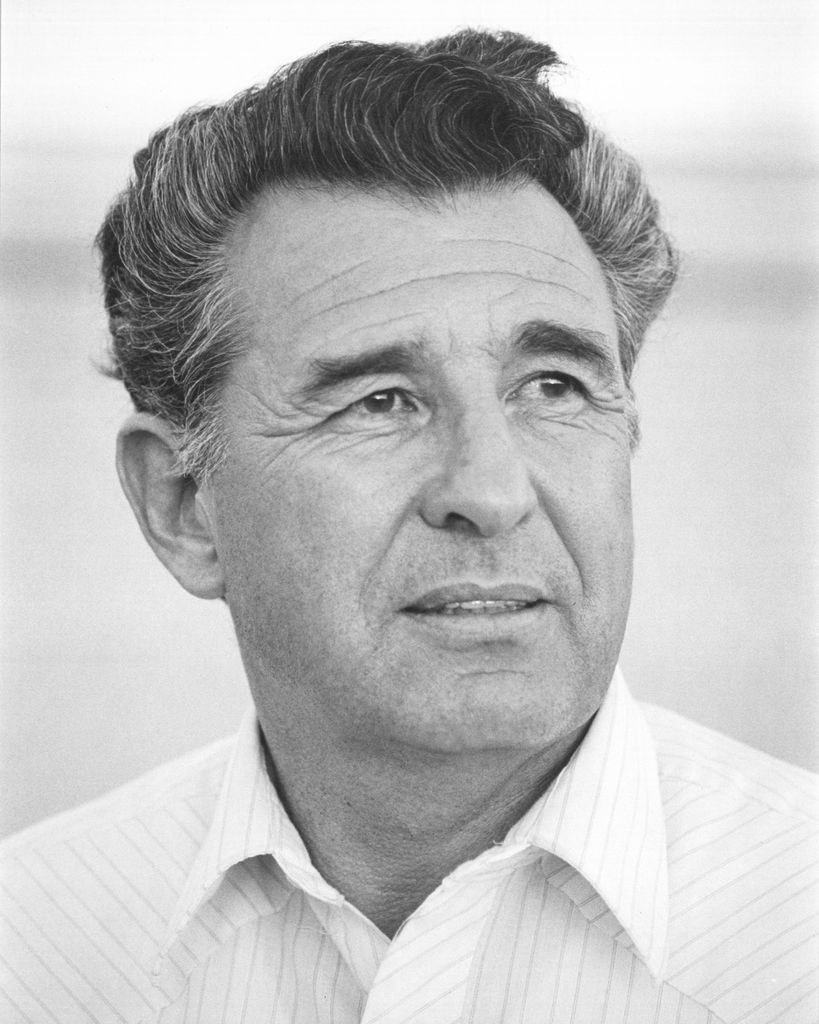
Ben Nighthorse Campbell
Apr 13, 1933 — Dec 30, 2025



Ben Nighthorse Campbell
It is with profound sadness and deep respect that I share that my incredible father, Senator Ben Nighthorse Campbell, has passed. He has gone on to be with his Maker, with our ancestors, and with our family who went before him. For those of you who knew him personally, you already know this to be true. A Great Warrior has left this world.
The past few months with my dad, as he readied himself to be called home by God, were some of the most precious, tender, and sacred time of our lives together. Nothing was left unsaid. The love we shared was mutual and complete, a blessing I will carry forever. On his final day, the tribal elders came to our home at Nighthorse Ranch, and Eddie Box Jr. sang the sacred songs of the Southern Ute Sundance, ancient songs that have carried Native people between worlds for generations. In his vision, Eddie saw my father on his horse, wearing his war bonnet and buckskins, riding into the other world, the warrior heading home.
Moments later, my dad passed peacefully. My mother Linda, my son Luke, his eldest grandson, and I were holding him as he took his last breath. It was exactly as it should have been, the songs of his people, the vision of him riding free, and the love of his family surrounding him. Caring for him in these final days and weeks has been the greatest honor and privilege of my life.
It has been said that we pick our parents. And if that is true, I sure picked a good one. From the time I was a little girl, my dad inspired me, believed in me, and supported everything I dreamed of becoming. Our relationship was special, and we were always proud of each other. He showed me that where you start does not determine where you finish. He transformed hardship into strength and obstacles into opportunity. He taught me that perseverance beats luck, that reinvention is courage, and that you never give up. He was fierce and tender, an artist and a champion. That is exactly who my father was.
My dad was born on April 13, 1933, in Auburn, California. His mother, Mary Vierra, was a Portuguese immigrant who battled tuberculosis for twenty six years. His father, Albert Campbell, a Northern Cheyenne, struggled with alcoholism and was often absent. By the time my dad was ten, he had spent half his life in St Patrick’s Catholic Orphanage in Sacramento. Years later, he would reflect on those early years as deeply traumatic.
Even within those orphanage walls, my dad was learning lessons that would define his life. As a young boy, he flattened silver coins on railroad tracks and worked them into jewelry, not only as art, but to trade for food. Art became his constant, the first sign of a creative genius that would one day earn more than two hundred national and international awards.
His teenage years were turbulent, marked by arrests and trouble with the law. At fifteen, he was arrested for stealing gasoline. At sixteen, for crashing a car. He was headed nowhere good.
Then came his own awakening. He realized he was on the wrong road and chose a different path. He enlisted in the Air Force and volunteered for the Korean War. He was not drafted. He volunteered. Before that, while working as a fruit picker in California’s Sacramento Valley, he met Japanese immigrants who introduced him to the martial art of judo. It changed everything. As he would say for the rest of his life, judo kept me off the streets and out of jail. More importantly, it taught him a philosophy he lived by forever, persevere and never give up.
He earned his GED while serving in the Air Force, then used the GI Bill to attend San Jose State University, graduating in 1957 with degrees in physical education and fine arts. He later moved to Tokyo for four years to train at Meiji University, one of the world’s most respected judo programs. He became a three time United States National Judo Champion, won gold at the 1963 Pan American Games, and in 1964 captained the United States Olympic judo team in Tokyo, becoming the first Native American on the United States Olympic judo team.
After the Olympics, my dad worked as a deputy sheriff, coached the United States national judo team, and taught high school. During this time, he met my mother, Linda Price, a Colorado native and public school teacher. They married in 1966 and built a life together that would span nearly sixty years. My dad credited my mom for so much of his success, once saying that without her, he would probably be in some hotel room watching television on an egg crate with a bunch of cool stuff that was not paid for.
My dad’s jewelry career flourished. Drawing on techniques learned from Japanese sword makers, he created work that earned more than two hundred national and international honors. His jewelry has been collected by celebrities including Mick Jagger and Robert Redford, as well as several United States presidents.
In 1977, my parents purchased a one hundred twenty acre ranch near Ignacio, Colorado, bordering the Southern Ute Indian Reservation. They raised my brother Colin, whose Indian name is Takes Arrows, and me, Sweet Medicine Woman. We bred and showed champion quarter horses and built a life grounded in land, family, and tradition.
My dad later traveled to the Northern Cheyenne reservation in Montana, where he found relatives he had never known and was enrolled as a member of the Black Horse family. At his name giving ceremony, he received the name Nighthorse. He would later serve as one of forty four Chiefs of the Northern Cheyenne Tribe, a role he cherished deeply.
Politics came almost by accident. In 1982, party officials needed someone willing to run for state representative in what was considered an unwinnable race. Only my dad stepped forward. He won with fifty seven percent of the vote. In 1986, he was elected to the United States House of Representatives. In 1992, he made history as the first Native American to serve in the United States Senate in more than sixty years.
For twenty two years, my dad served in public office. In 1995, he switched political parties over fiscal conservatism while remaining socially progressive.
His legislative accomplishments were extraordinary. He authored the bill establishing the National Museum of the American Indian and fought to include provisions requiring the return of Native American remains to their tribes. He became the first and only Native American to chair the Senate Committee on Indian Affairs, passing more pro Indian legislation than in any comparable period.
He ranked number one in the One Hundred Sixth Congress for passing the most legislation into law. He helped create two national parks and sponsored two national museums in Washington, DC, the National Museum of the American Indian and the National Law Enforcement Museum. Lake Nighthorse in southwestern Colorado bears his name. He co authored the Indian Gaming Regulatory Act and championed changing the name of Custer Battlefield to Little Bighorn Battlefield National Monument.
Perhaps his most personal achievement was the Sand Creek Massacre National Historic Site. My dad was a direct descendant of Red Dress and Yellow Woman, two sisters murdered in the massacre of November 29, 1864. He fought for years to ensure the site was recognized and honored. At its dedication in 2007, he camped there the night before. He later reflected that it was peaceful and beautiful, with children playing by the fire, and he thought about how it must have felt the night before the massacre, when no one knew what was coming.
Throughout his career, my dad remained unapologetically himself. He rode his Harley to the Capitol, led the Colorado POW and MIA Recognition Ride for a decade, and was the only United States Senator with a commercial trucking license. In 2005, he personally drove the National Christmas Tree more than five thousand miles from Meeker, Colorado, to Washington, DC.
His many honors include the Ellis Island Medal of Freedom, the Order of the Rising Sun from Emperor Akihito in 2011, induction into the National Native American Hall of Fame in 2021, and the 2023 Sovereign Warrior Award.
My father is survived by my mother, Linda Campbell; myself, Shanan Campbell; my brother Colin Campbell and his wife Karen Campbell; granddaughters Lauren and Caroline Campbell; and grandsons Luke and Saylor Longfellow.
Dad, you were a wonderful father, and I was incredibly lucky to be your daughter. You taught me through experience, from taking me to Santa Fe Indian Market as a child and keeping me so close. Everything I have built through Sorrel Sky flows from those times. You taught me that perseverance beats luck, that fierce and tender are not contradictions, and that honoring your ancestors means fighting for the future.
In these last years of his life, one of my dad’s greatest joys was seeing a new chapter of his life’s work come alive. My mom Linda, my son Luke, and I are proudly carrying on his legacy through Nighthorse jewelry. Watching Luke step into the creative lineage, and seeing the renewed energy and excitement around the work he loved so deeply, brought my dad immense pride. He often said this was one of the most fulfilling times of his life. Nighthorse jewelry was never just his art. It was his story, his spirit, and his values made tangible. He will forever be the heart and soul of Nighthorse jewelry.
My father will be laid to rest at Nighthorse Ranch in a private family service. Information about a public celebration of his life will be shared in the coming days.
In lieu of flowers or gifts, donations may be made to the Northern Cheyenne Boys and Girls Club in Lame Deer.
Guestbook
Visits: 1908
This site is protected by reCAPTCHA and the
Google Privacy Policy and Terms of Service apply.
Service map data © OpenStreetMap contributors